
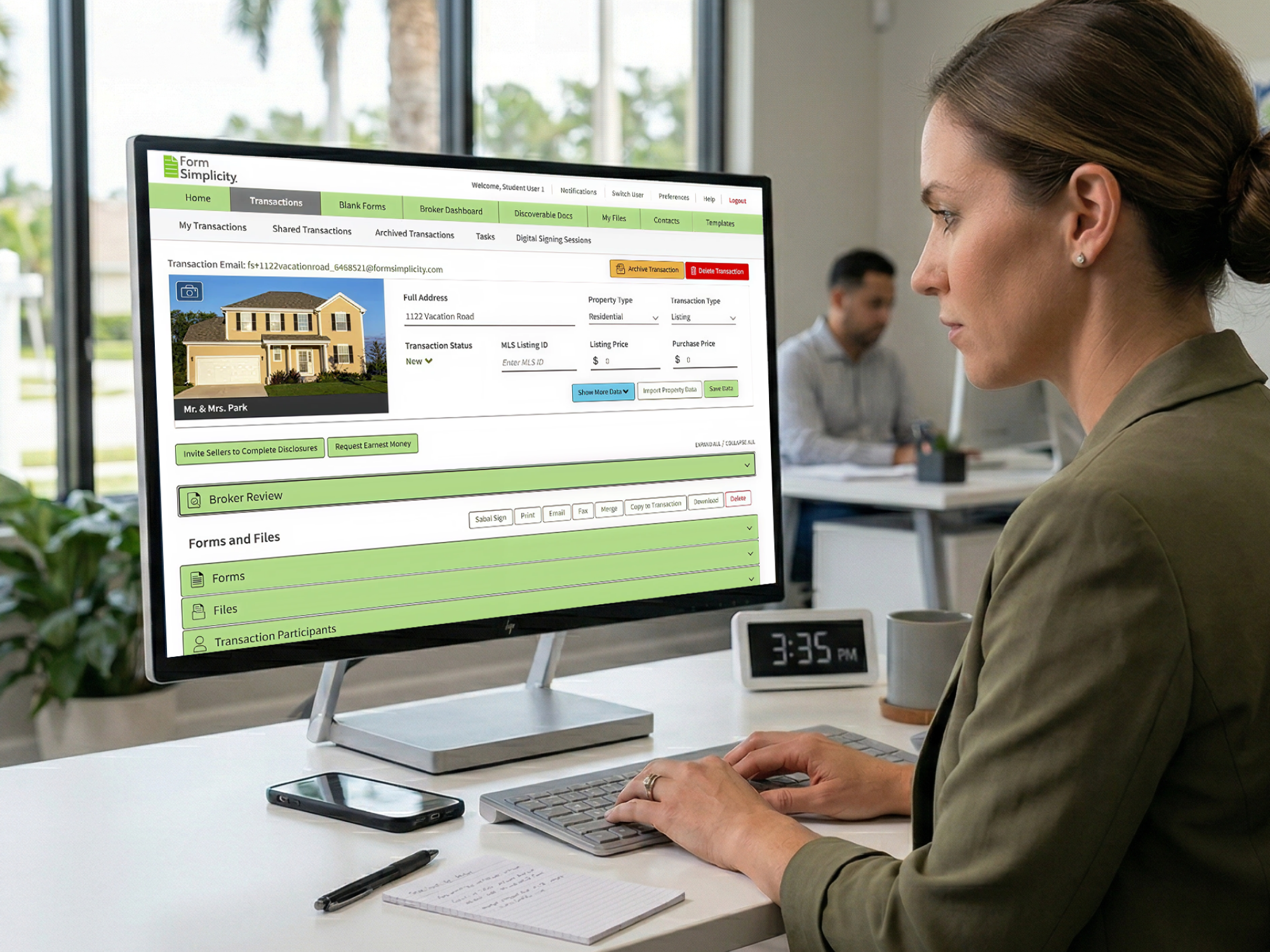
Selecting a real estate transaction management system is no longer a simple software decision. For MLSs and REALTOR associations, it is an infrastructure choice that affects member adoption, transaction workflows and compliance processes, data security, and long-term support demands.
In 2026, members expect seamless digital workflows for forms, electronic signatures, document storage, and compliance-supporting workflows. The right transaction management platform should integrate cleanly into member workflows while remaining easy to support at scale. This guide outlines the key capabilities MLS and association leaders should evaluate when choosing a transaction management system for their organization.
Why MLS and Association Leadership Must Evaluate Transaction Management Infrastructure Carefully
Transaction management systems sit at the center of a member’s daily workflow. While MLS and association staff are not typically the primary users, the system they select for their members directly impacts adoption rates, processes that support compliance, training demands, and support volume.
A fragmented or outdated platform can create confusion for members and increase administrative strain for staff. A well-designed transaction management system, on the other hand, supports secure document handling, integrated electronic signatures, structured transaction workflows that support compliance, and consistent member experiences. Evaluating this infrastructure carefully ensures the platform aligns with long-term member needs and organizational oversight standards.
Common Challenges MLSs and Associations Face with Outdated Transaction Management Systems
Many MLSs and associations still rely on legacy transaction platforms or loosely integrated tools for forms, signatures, storage, and compliance. While these systems may function independently, they often fail to provide a unified workflow that meets modern expectations.
The impact extends beyond member frustration and is felt across the organization. Members must navigate disconnected tools, increasing friction, slowing transactions, and introducing avoidable errors. Staff face higher support volumes and greater challenges scaling training efforts, while brokers may lack consistent visibility into transaction compliance when workflows are not centralized.
Evaluating a modern transaction management system requires identifying where current technology gaps are creating friction for members and operational strain for the organization.
Disconnected Systems
When MLSs and associations offer multiple tools that do not integrate well, members are left to piece together their own workflows. Switching between platforms for forms, MLS data, signatures, and document storage can slow transactions and increase the risk of errors.
By providing access to unified platforms or well-integrated systems, MLSs and associations help members avoid unnecessary complexity. This approach reduces confusion, improves adoption, and allows staff to support a single, consistent solution rather than troubleshooting multiple disconnected tools.
Manual or Inefficient Workflows
Transaction management platforms that rely on manual steps, external uploads, or spreadsheet-based tracking introduce unnecessary risk and delay. Members may miss deadlines, overlook required documents, or struggle to navigate multi-step processes.
As part of platform evaluation, MLS and association leaders should prioritize platforms that offer structured workflows, automation, and clear transaction organization. Efficient workflows reduce user error and minimize the volume of support inquiries related to preventable mistakes.
Limited Compliance and Oversight
Broker oversight visibility is a core consideration when selecting a transaction management system. If documents and signatures are stored in multiple locations or handled through external tools, it becomes difficult to verify completion or maintain consistent standards.
Modern transaction management platforms provide centralized storage, timestamped document histories, and structured workflows that support compliance. These capabilities allow MLSs and associations to recommend a system that supports clearer broker oversight and more consistent compliance across member transactions.
Security and Data Vulnerabilities
Transaction management systems handle highly sensitive data, including contracts, disclosures, financial information, and client identification details. Platforms that lack strong encryption, access controls, and secure storage protocols introduce significant risk.
During vendor evaluation, MLS and association leaders should assess how transaction data is stored, protected, and accessed. A secure platform should include encrypted document storage, permission-based access controls, and secure electronic signature processes designed specifically for transaction-level data protection.
Training and Member Support Struggles
A transaction management system should not create unnecessary training burdens. Complex interfaces, inconsistent workflows, and unclear documentation increase onboarding time and generate repetitive support requests.
When evaluating vendors, MLSs and associations should consider the availability of structured onboarding, live training sessions, ongoing educational resources, and responsive support channels. An intuitive, well-supported platform reduces staff strain and improves overall member adoption.
Core Capabilities to Look for in a Real Estate Transaction Management System
To operate efficiently in 2026, MLSs and associations are expected to offer technology that supports how members actually work. Rather than managing transactions themselves, organizations focus on providing agents with access to tools that help them complete deals efficiently, securely, and compliantly.
The right technology stack allows MLSs and associations to support members at scale, simplify onboarding, and drive consistency across transactions. These tools also make it easier for staff to train members, answer questions, and maintain confidence in the solutions they recommend.
Secure Digital Document Storage
Secure digital document storage keeps all transaction-related files in one protected environment. Brokers and agents depend on this type of system to ensure that documents are easily accessible, properly organized, and safeguarded from unauthorized access. A centralized storage solution reduces the stress of searching through scattered tools or outdated archives.
eSignature and Forms Tools
eSignature and form tools are essential services that MLSs and associations often provide or integrate into their member offerings. When these tools are integrated into a trusted real estate transaction management platform, members can complete and track documents digitally, eliminating the need for multiple third-party systems.
This not only improves efficiency for agents but also makes it easier for associations to support consistent, compliant workflows. Offering reliable digital signing solutions helps reduce errors, speed up transactions, and improve the overall member experience.
Task Automation & Document Review
Transaction workflow organization is essential for agents and brokers managing multiple active deals. A well-designed transaction management platform should include structured task lists, deadline tracking, and automated reminders tied directly to each transaction.
Equally important is the ability to support structured document review. Platforms should allow brokers to define review requirements and enable agents to link relevant documents within a transaction to those requirements, creating a clear and organized review process. This allows brokers and agents to collaborate within the system, reduces missed steps, and improves transaction consistency across the membership base.
Compliance and Audit Readiness Systems
When evaluating a transaction management platform, built-in processes that support compliance should be a core consideration. The system should allow brokers and designated reviewers to easily verify that required documents are completed, signatures are collected, and transaction steps follow established guidelines.
Strong platforms provide centralized document histories, timestamped activity records, and structured workflows that support audit readiness. Rather than layering compliance on top of the process, the right transaction management system embeds oversight directly into each transaction, improving consistency while reducing the need for repetitive manual checks.
Mobile-Friendly Member Tools
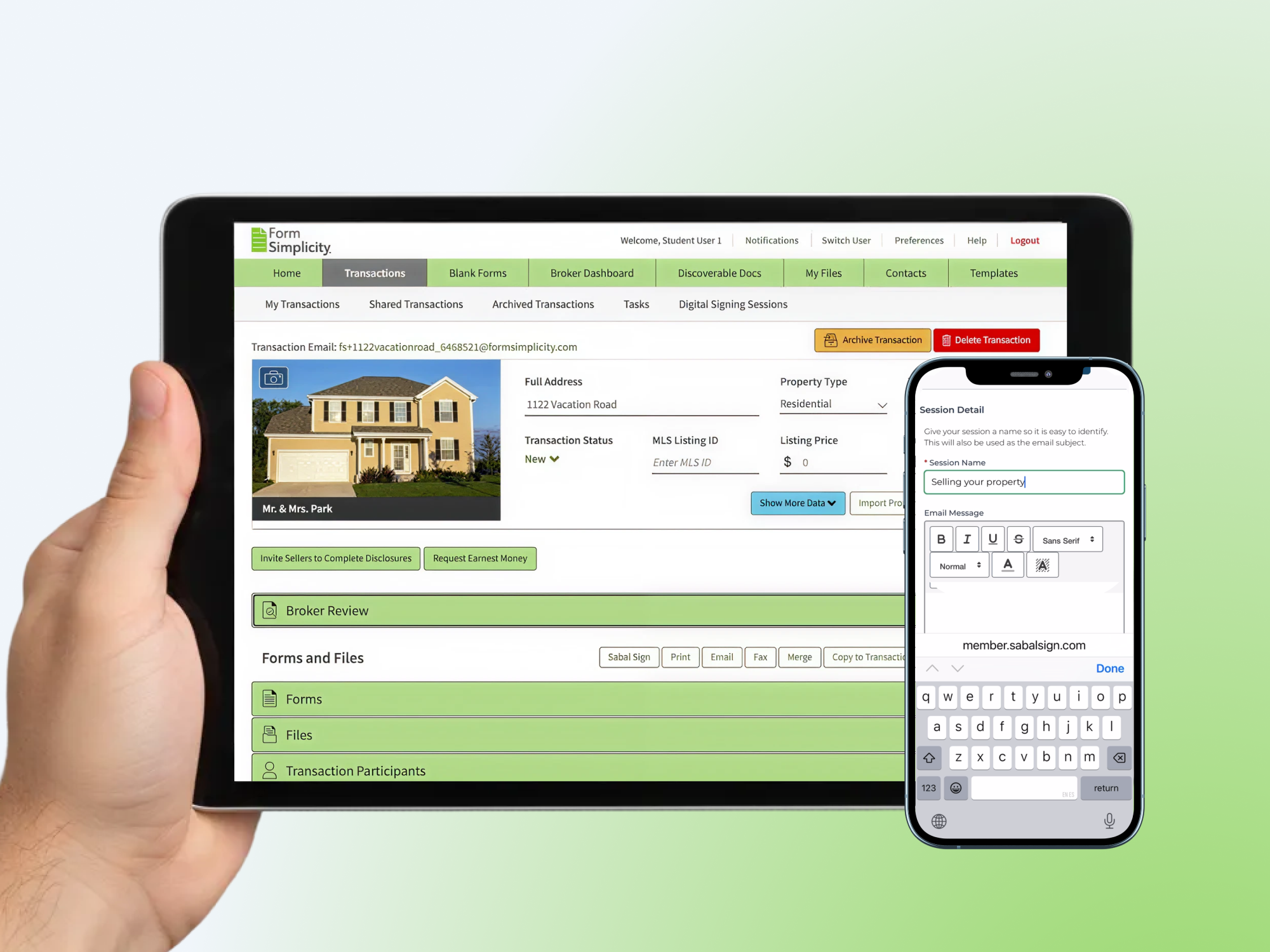
Transaction management systems must provide secure access across devices. Agents expect to fill out forms, send documents for signature, review files, and monitor transaction progress from their phone, tablet, or laptop.
During vendor selection, MLS and association leaders should confirm that transaction access is fully functional across devices, not just viewable. Mobile-friendly design ensures members can manage active deals wherever business takes them, without compromising document security or workflow continuity.
Communication and Support Platforms
Effective transaction management platforms reduce the need for fragmented communication by keeping documents, status updates, and transaction details within one system. Shared visibility into file activity, document progress, and task completion helps brokers and coordinators stay aligned without relying solely on external email threads.
From an evaluation standpoint, MLSs and associations should assess how the platform supports transaction-level collaboration and visibility. Systems that centralize transaction information make it easier for members to stay informed and for organizations to recommend a consistent, streamlined workflow.
Integration with Existing Systems
Transaction management systems rarely operate in isolation. MLSs and associations must evaluate how well a platform integrates with existing membership databases and other core tools members use to run their business.
Strong integration capabilities reduce data silos and prevent redundant manual entry. Vendors should be able to demonstrate how their system fits within the broader technology ecosystem without requiring extensive workarounds or custom development.
What to Look For When Evaluating Tech for MLS or Association Operations
Selecting a transaction management system is not simply a feature comparison. For MLSs and REALTOR associations, it is a long-term infrastructure decision that affects member adoption, transaction workflows and compliance processes, support burden, and operational scalability.
Decision-makers should evaluate platforms based on vendor reliability, system architecture, security standards, integration capabilities, and the ability to support growing membership demands. The right transaction management partner should deliver stability, clear oversight functionality, and a consistent member experience without increasing administrative complexity.
Ease of Use for Members
Software that is easy to navigate directly impacts member adoption and day-to-day productivity. Members need clear pathways for completing forms, accessing documents, and managing transactions without confusion or unnecessary steps.
For MLSs and associations, ease of use reduces support volume and simplifies member training, making it easier to support a consistent experience across the membership base.
Data Security and Access Controls
Transaction management systems handle highly sensitive contract data, financial information, and personal client records. Vendor evaluation should include a detailed review of encryption standards, secure storage protocols, role-based permissions, and authentication safeguards.
MLS and association leaders should confirm that the platform meets modern security expectations and is designed specifically to protect transaction-level data. Clear access controls and secure document handling reduce organizational risk and strengthen member trust.
Scalable Features for Growing Membership
Scalability is a critical evaluation factor. As membership grows and transaction volume increases, the platform must maintain consistent performance without degradation or costly structural changes.
Decision-makers should assess system capacity, performance under high transaction volume, and the vendor’s ability to support expansion. A scalable transaction management system ensures long-term viability and protects the organization from needing frequent platform replacements.
Reliable Support and Training Resources
Technology is only as strong as the vendor behind it. MLSs and associations should evaluate vendor track record, financial stability, customer retention, and industry reputation.
Support infrastructure is equally important. Leaders should assess the availability of live training, onboarding resources, technical support responsiveness, and update transparency. In some cases, dedicated third-party support teams further reduce the burden on MLS and association staff by handling member support directly, allowing organizations to focus on member services rather than technical troubleshooting. A reliable vendor partnership reduces internal support strain and improves overall system confidence.
A Centralized Platform Instead of Multiple Tools
Relying on multiple systems often leads to confusion, extra expenses, and fragmented workflows. A centralized platform consolidates forms, documents, signatures, compliance, and communication in one location. This consolidation helps eliminate the back-and-forth that comes with switching between tools.
How Form Simplicity’s Ultimate Edition Supports MLS and Association Operations
When evaluating transaction management systems, MLS and association leaders must consider how the platform performs at scale, how it supports oversight, and how it reduces long-term administrative complexity. Form Simplicity’s Ultimate Edition is structured to align with these infrastructure priorities by combining electronic signatures, document storage, and compliance-supporting processes into a unified system.
Rather than layering multiple tools together, the Ultimate Edition consolidates core transaction functions in a way that supports member workflows while maintaining a clear and consistent member experience. Support is provided through Tech Helpline, reducing the need for MLS and association staff to manage member-level technical support and enabling them to focus on member services.
Standardized Forms and Autofill Capabilities
Transaction management platforms must provide direct access to standardized, association-approved forms within the workflow. Systems that require external form libraries or manual uploads introduce unnecessary friction and increase the risk of outdated documents being used.
An effective platform ensures that members are always working from the most current forms, with the ability to autofill data across documents, reduce manual entry, and maintain consistency throughout the transaction process.
Seamless MLS Integration
Integration with MLS data is a key capability that reduces manual data entry and improves transaction efficiency. When property details can be pulled directly into transaction workflows, members save time and reduce the likelihood of input errors.
MLS and association leaders should evaluate whether a platform supports seamless data transfer between systems, allowing members to initiate transactions with accurate property information already in place.
Unlimited Electronic Signatures
The Ultimate Edition includes unlimited electronic signatures through Sabal Sign, eliminating usage caps that can restrict adoption or create cost unpredictability. From an evaluation standpoint, unlimited signing capacity supports consistent member access and reduces dependency on external signature vendors.
Unlimited Document Storage
Unlimited document storage removes constraints that can complicate long-term record management. Members can archive contracts, disclosures, and signed documents within the same system without shifting files between platforms or monitoring storage limits.
For MLSs and associations, this centralized storage model supports stronger compliance consistency and simplifies audit review processes. Long-term document retention becomes part of the system architecture rather than an external consideration.
Tools Designed for High-Volume Member Use
MLSs and associations must evaluate whether a platform can perform reliably under high member usage and transaction volume. The Ultimate Edition is structured to support large user bases with consistent performance and organized transaction environments.
Forms, signatures, storage, and oversight functionality operate within one system, reducing fragmentation. This centralized design helps maintain stability during peak market cycles and supports scalable adoption without requiring structural changes.
Enhanced Compliance Readiness
Processes that support compliance are a critical evaluation factor for MLS and association leadership. The Ultimate Edition maintains transaction-level document histories, timestamped activity tracking, and secure storage within a unified system.
This structure allows brokers and authorized reviewers to confirm document completion, signature timing, and workflow consistency without manual cross-checking across platforms. By embedding compliance readiness within the transaction management system itself, the platform supports clearer oversight and help reduce administrative strain.
Delivering Member Value at Scale
Ultimately, the value of a transaction management platform is measured by how effectively it supports members in completing their daily work. A well-designed system reduces administrative burden, shortens transaction timelines, and minimizes errors.
For MLSs and associations, offering a reliable, unified platform enhances member satisfaction, increases adoption rates, and reinforces the organization’s role as a provider of essential business tools. When members can complete transactions efficiently and confidently, the entire ecosystem benefits.
Schedule a Demo of Our Real Estate Transaction Management Platform
During your demo, you’ll explore how our real estate transaction management platform integrates seamlessly into MLS and association member services. You’ll see how unlimited eSignatures with Sabal Sign, secure document storage, and workflows designed to support compliance help members complete transactions efficiently without adding complexity for staff.
Demos are available for associations and brokers onboarding ten or more agents, while individual agents can join one of our live webinars. It’s an easy way to understand how the right transaction management tools for real estate can help reduce administrative workload, strengthen broker oversight, and help your members manage every deal with confidence.


This site uses Cookies.
The types of cookies we use, and the way we use them, are explained in our Privacy Policy. By clicking "Accept" or continuing to use our site, you agree to our use of Cookies. More information.